Guides · United Kingdom · recruiters, HR & hiring managers
Wording patterns worth a self-check before you publish
Common job-ad phrasing patterns that are worth self-checking on a draft. Use this as a self-check habit — flag for human review, then edit. Not legal advice. Not Equality Act clearance.
Free limited check · £9.99 full PDF · £79.99/mo (up to 20)
How to use this list
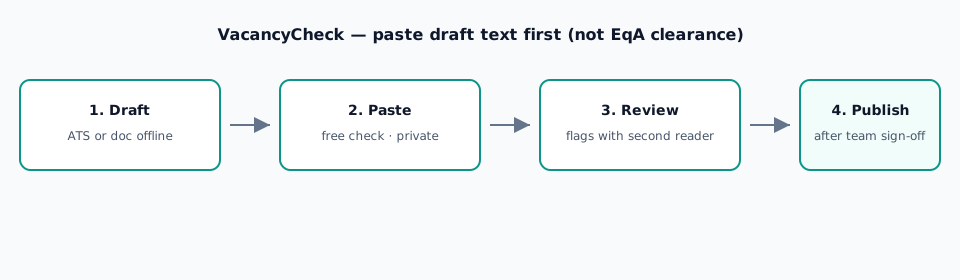
Search your draft for each pattern. When you find a hit, ask: is this about the work, or about who we assume should apply? Rewrite toward tasks, skills, and outcomes. VacancyCheck can flag wording risks at scale; this guide is the manual version.
1. Hard experience cut-offs
Phrases like “minimum 10 years” or “at least 5 years in X” often appear when “proven delivery in X” would do. Self-check every numeric years-of-experience line and decide whether it is truly essential on day one. See the years-of-experience cut-offs guide for rewrite prompts and a public pitfall story.
2. Age or stage shorthand
Lines such as “young, energetic team”, “digital native”, or “recent school leaver only” describe people rather than work. Prefer descriptions of pace, tools, or training you actually provide.
3. Gendered titles and pronouns
Default male/female titles or “he/she will…” can be swapped for neutral titles and “you will…”. Review titles against what candidates will search for, then keep one clear neutral form.
4. “Culture fit” without substance
If culture is important, say what that means in behaviour at work (feedback style, on-call expectations, travel). Empty “fit” language is a frequent self-check flag because it is vague and easy to misread. See the culture-fit wording guide for rewrite prompts and the sample flag 05 rewrite.
5. Physical or attendance lines untied to tasks
When you state physical demands or fixed hours, link them to the job: lifting stock, site visits, customer-facing shifts. Untethered requirements are worth a second human pass.
6. Exclusionary “must already be…” lists
Long stacks of niche tools as “essential” shrink the pool and may not match day-one reality. Split into essentials vs training-provided. Preferences belong in a separate paragraph.
7. Location and right-to-work phrasing
State work location and any sponsorship reality plainly. Avoid coded geography that is really about something else. Keep the line factual and up to date. Language and nationality lines deserve the same split — see native speaker vs language skill.
After the self-check
Paste the revised draft into VacancyCheck for a structured wording risk report. Free limited check weekly; full PDF from £9.99. Outputs are informational flags for your team — not a green light from a lawyer.
Reminder
- These are hygiene patterns, not a statute checklist.
- Not legal advice. Not Equality Act clearance.
Related guides
- Pre-publish job-ad wording checklist
- Draft text first — why paste beats a live URL
- “Fully fit” and able-bodied lines on warehouse job ads
- Equal-opportunities line vs the title
- Culture-fit wording in job adverts
- Native speaker vs language skill requirements in job ads
Paste draft text — free check All guides
Not legal advice. Not Equality Act clearance. Informational wording hygiene only.