Guides · United Kingdom · recruiters, HR & hiring managers
Native speaker vs language skill requirements in job ads: a self-check, not a verdict
“Native English speaker”, “fluent English essential”, “UK passport holders only” — language and eligibility lines often arrive in one paragraph on UK vacancy drafts, especially on staffing and early-careers ads. This guide helps you split three different ideas: language skill tied to tasks, right-to-work as a factual later check, and “native” as wording that deserves a human second look. Wording literacy only — not immigration or sponsor-licence advice, not legal advice, and not Equality Act clearance.
Free limited check · £9.99 full PDF · £79.99/mo (up to 20)
Three lines that get mixed together
On a draft, recruiters often paste one block that blends:
- Language skill — what communication the role needs on day one (calls, briefings, written reports, customer-facing tone).
- Right to work — a factual eligibility check at offer stage — not a nationality filter in the advert body.
- “Native” wording — a label about where someone learned English, not a task description.
ACAS’s public indirect-discrimination examples include a vacancy for a “German sales rep” where the role really needed German-speaking ability — nationality vs language skill. That example is cited here as desk literacy (see ACAS on types of discrimination), not as a ruling on your draft.
How to read “native” and “fluent” on a draft
When you see a language line, ask three reading questions — not “is this unlawful?” but “what is this line trying to say?”
- Is the level tied to a named task? “Clear spoken English for safety briefings” is different from “native speaker essential” with no context.
- Could you drop “native” and keep the skill? Trade press and HR explainers (e.g. Sprintlaw’s “words to avoid”, journalism-sector surveys on “native speaker” in ads) treat “native” as wording to replace — this guide cites them as literacy, not as clearance.
- Is right-to-work mixed into the advert? “UK passport only” in the person spec is a different line from “must have right to work in the UK — we will verify at offer”. Keep eligibility factual and separate from language skill.
VacancyCheck flags lines like Fluent English essential for human review — see flag 08 on the sample full report (fictional Northern Logistics draft). A flag is a prompt to rewrite toward the work; it is not a finding that the line is unlawful.
Common patterns on UK job ads
| Pattern on draft | What it often means | Rewrite toward |
|---|---|---|
| “Native English speaker essential” | Unspecified language bar | Spell out communication: calls, briefings, written reports, customer tone. |
| “Fluent English essential” | Real skill need, vague level | “Clear spoken English for radio calls and safety briefings; reading of pick labels.” |
| “German sales rep required” | Language + nationality conflated | “German-speaking sales executive” — ACAS-style literacy example. |
| “UK passport holders only” | Nationality filter in the advert | Separate right-to-work verification from published must-haves; get immigration advice off-page. |
| “Mother tongue English” | Same cue as “native” | Task-linked language level; drop birthplace labels. |
Pattern 7 in wording patterns to self-check covers location and right-to-work phrasing. Agency brief rows for “native English speaker” are in client brief vs agency job ad.
Fictional sample: before and after
On the fictional Northern Logistics excerpt in the sample full report, the draft says “Fluent English essential” without naming what communication the shift needs. The sample rewrite moves to task language:
“Clear spoken English for radio calls and safety briefings; reading of pick labels and hazard notices.”
That is the desk habit this guide is pointing at: replace the label with the communication the role needs. Whether a particular language level is objectively justified for your operation is a human HR decision — not something a wording scan decides.
Desk habit: split the lines before publish
- Highlight every “native”, “fluent”, “mother tongue”, and nationality line on the person spec.
- Write one sentence per line: what spoken or written communication on week one needs this?
- Move right-to-work to a factual eligibility note — not a nationality filter in the advert body.
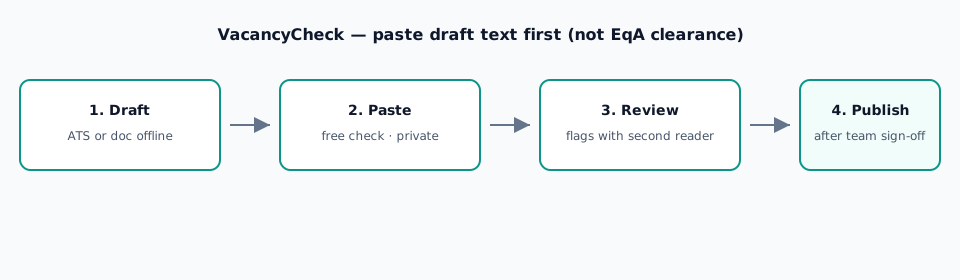
- Paste the revised draft into VacancyCheck before a multi-board blast. Free = limited on-screen flags (1 per verified email per rolling week); full PDF = £9.99; subscription = £79.99/mo up to 20 reports.
- Archive who signed off the published text. Prefer paste over live URL pre-publish.
Public-sector roles with specific English-language duties follow separate policy (Immigration Act 2016 public-sector fluency duty). This guide stays on private-sector advert wording — not on how to run a fluency assessment.
What this guide is not
- Not legal advice or a substitute for HR, immigration, or legal counsel.
- Not Equality Act clearance or a compliance certificate.
- Not immigration, sponsor-licence, or Home Office genuine-vacancy audit advice.
- Not commentary on visa products or “vacancy check” tools aimed at sponsors — different product category.
- Not a promise that task-linked language lines make an advert “safe”.
Related guides
- Culture-fit wording in job adverts
- When the client’s brief should not become the live job ad
- Equal-opportunities line vs the title and must-haves
- Wording patterns worth a self-check
- Pre-publish job-ad wording checklist
- Draft text first — why paste beats a live URL
Paste draft text — free check See sample full report
Not legal advice. Not Equality Act clearance. Informational wording hygiene only. Last reviewed 14 September 2026.